RELIGION, PHILOSOPHY AND ETHICS (RPE)
In Religion, Philosophy, Ethics (RPE) and Worldviews we establish a safe space for students to think, speak and discuss their own religion or worldview whilst respecting that others will not always agree; and that is okay!
We teach students about religious identity, belonging, community cohesion, tolerance, inclusion, history of religion, beliefs of religions, actions of religious people, teachings of religious traditions – leaders and texts and finally, scholarly work in the disciplines of philosophy and ethics.
In complimenting the whole school intent, we work to educate students on religious, worldview, philosophy and ethics content. We call this learning about religion and worldviews.
We work to develop students’ character through the application of teachings of religious, worldview, philosophy and ethics content. We call this learning from religion and worldviews.
The syllabus is based loosely upon the Cambridgeshire Agreed syllabus which is designed to be broad, balanced and knowledge rich. The aim is to develop learners to be critical and reflective thinkers.
The syllabus is designed to introduce students to new vocabulary and develop their language acquisition through the three tiers of vocabulary.
The content taught in lessons is accessible to all students with resources and approaches adapted as necessary through teaching.
The goal we have for our students is to have respect, tolerance and kindness for ALL in the community. This can simply be displayed through the acknowledgement of other people’s choices and acceptance of this without prejudice or discrimination.
To show clear knowledge of other people’s faiths.
Respect others’ views regardless of religion or worldview. Understanding that respect and understanding is not the same as changing one’s worldview.
RE is NOT on the National Curriculum – we loosely follow the Cambridgeshire and Peterborough agreed syllabus. The curriculum we follow has been approved by the Local Area Advisor for Cambridge and Peterborough.
key stage 3
Aims of the curriculum area
• To contribute to the spiritual, moral, cultural and social development of all students.
• To develop students’ ability to make reasoned and informed responses to religious, non-religious, ethical and moral issues.
• To appreciate both religious and non-religious views as a significant element in human experience.
• To identify, investigate and respond to fundamental questions of life raised by religion and by human experience.
• To promote the development of problem solving, communication, debating, reasoning and organisational skills.
• To help students to better understand the various cultures and belief systems of the world.
• To develop the many different forms of literacy.
teaching methods
A variety of teaching methods are used, including independent research, group work, debate and structural discussions, project based learning, whole class teaching, and the use of ICT and full implementation of iPads from year 10 through to year 13.
resources
• The department provides students with text books and a variety of worksheets and booklets.
• OneNote is used to provide students access to all resources that they need at GCSE and A Level
• The department is also fortunate in having a wide range of artefacts and other visual resources
key stage 3 curriculum outline
• We have embedded the Cambridgeshire Agreed Syllabus which was launched in May 2018. This syllabus requires the major world religions to be taught at Key Stage 3 as well as non-religious views such as Atheism and Humanism. The curriculum also contains modules related to social, ethical, moral and current issues.
• In year 8, students are taught about the major 6 religions of the world. The Abrahamic faiths are taught from youngest to oldest , Islam, Christianity and then Judaism. After this the faiths originating in India are taught youngest to oldest again, Sikhism, Buddhism and Hinduism. For each, students are taught about the religion and then asked to consider what lessons can be taken from each.
• In year 9, students are taught about Atheism and the Humanist worldview, then we look at the different approaches to the origins of life and the universe focusing on the compatibility of religion and science.
• After this, we focus upon introducing the idea of authority in religion by completing lessons on the main figures and holy texts of Christianity and Islam. Students then discuss ethics, morality and examples of moral people from history.
key stage 4
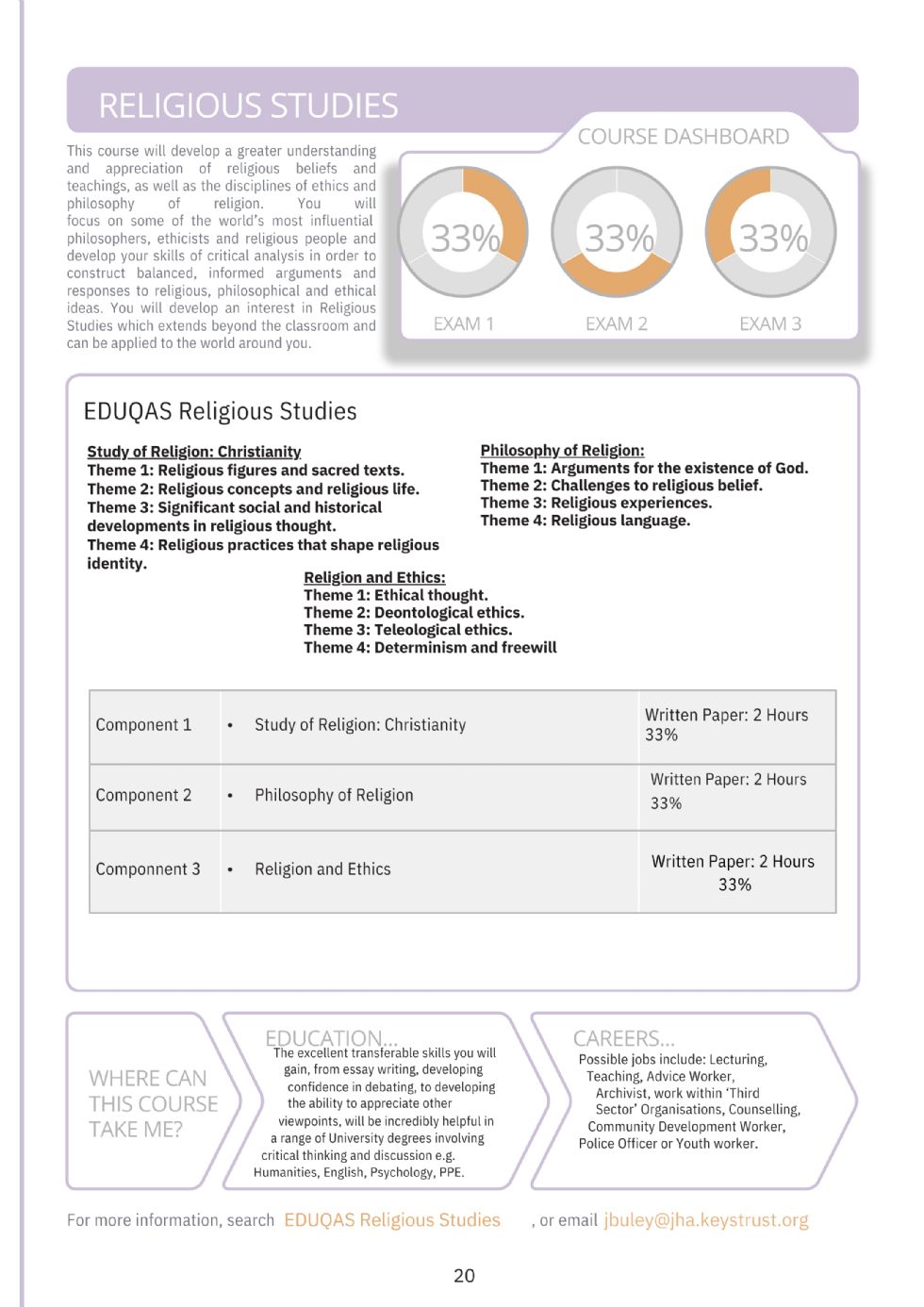
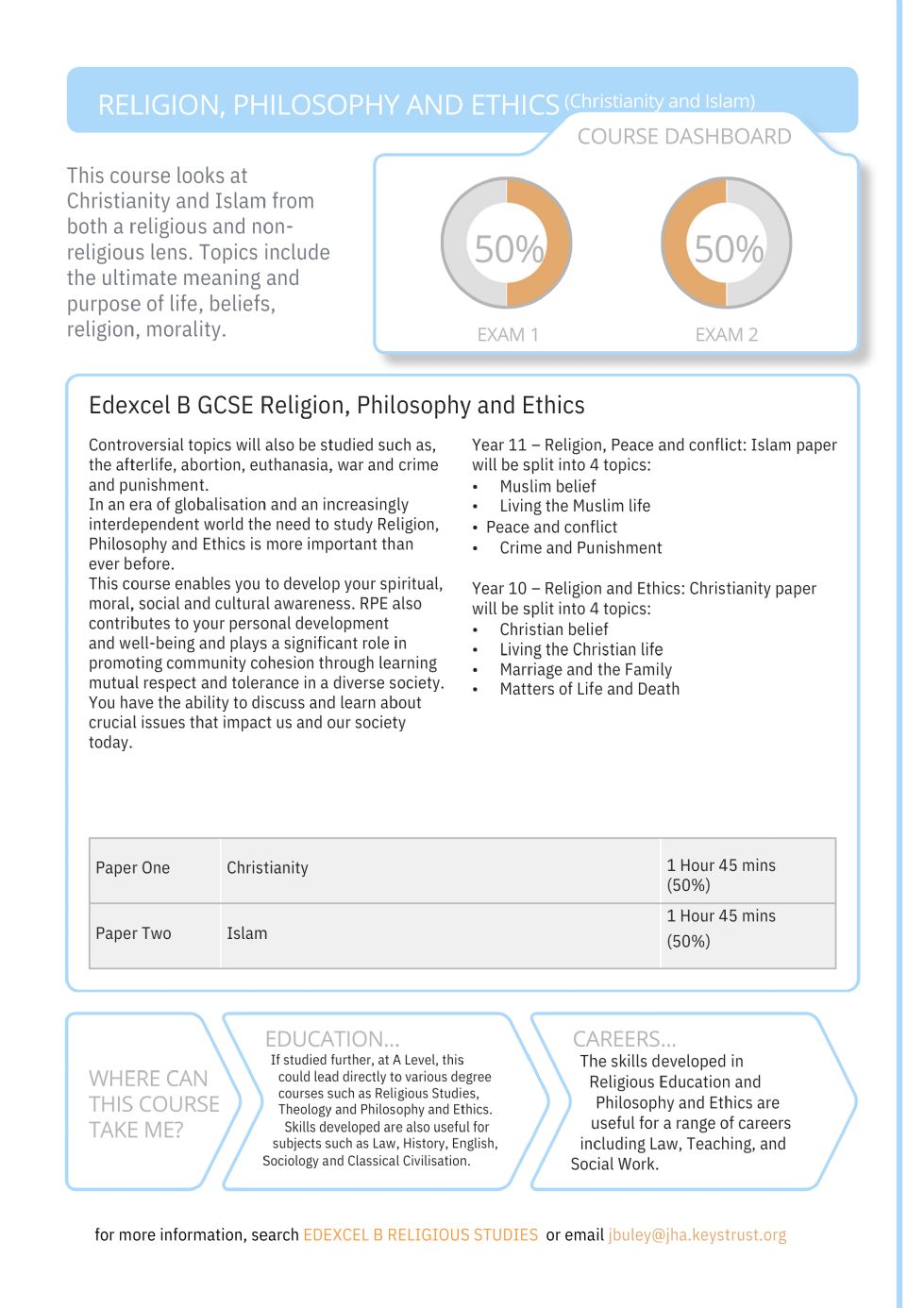
Years 10-11 GCSE – Knowledge recall and evaluation. This year is dominated by the attempt to achieve a GCSE in RE. This is normally split into two types of learning: knowledge recall and the evaluation of religious arguments with reference to religious sources of authority.
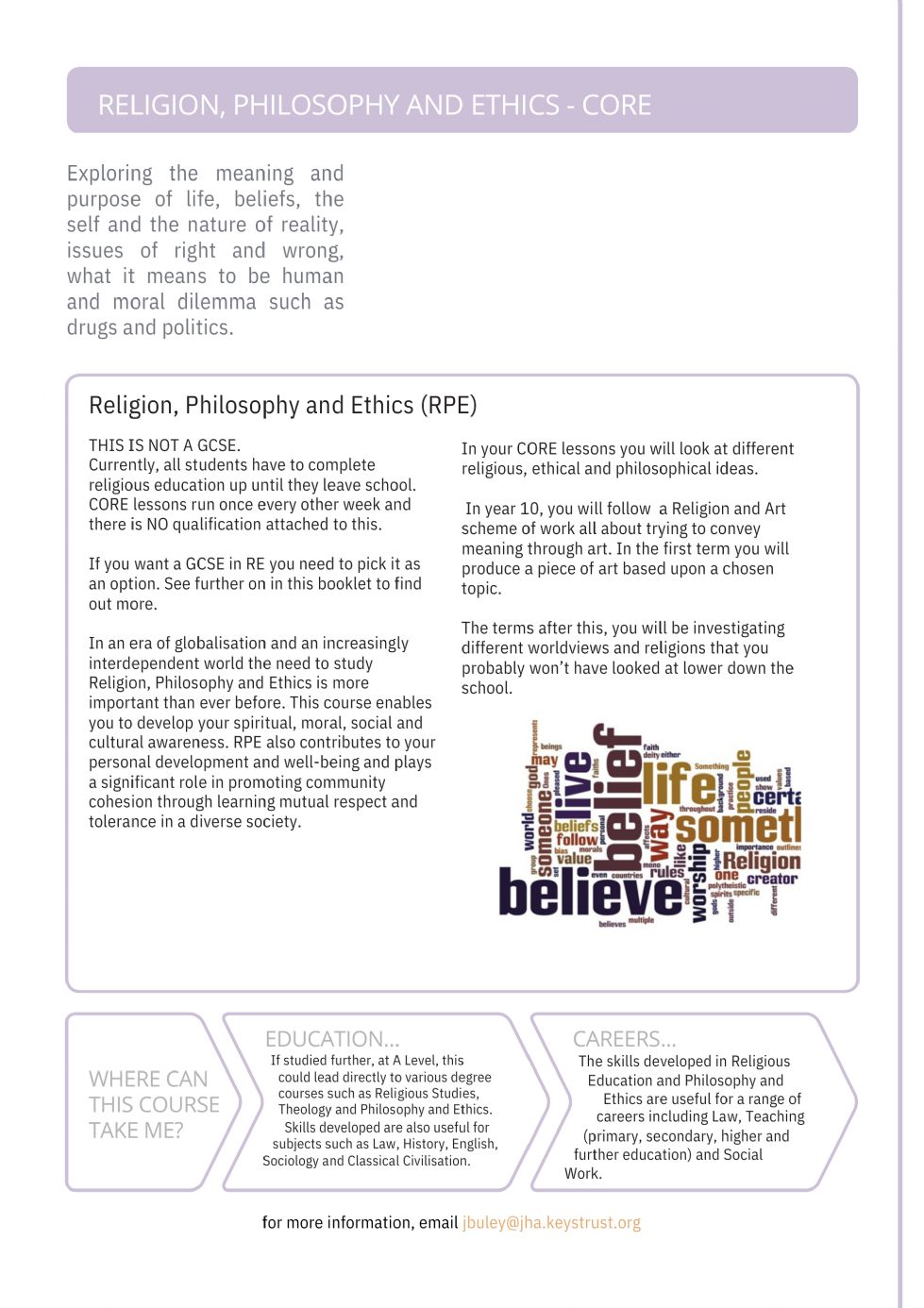
Years 10-11 CORE – Enquiry learners. Students who do not opt to study an RE GCSE will complete lessons in CORE RE. Here students are enquiry-based learners, not called upon to write extended answers on topics but encouraged to think critically about the topics we discuss based a plethora of stimuli.
key stage 5
Years 12 -13 – Analytical Evaluators. Here is the pinnacle of what we try and foster throughout the student’s career from KS3 through till the end of KS4. Students at this stage should be enquiry-based learners and specifically chosen to study this subject. Students can recall knowledge, explain and reference sources of authority for different topics. They can analyse and evaluate different perspectives and use sources of authority for this. Finally, student should be looking to deepen and develop their own knowledge and learning by reading around the classroom resources and bringing additional scholarly thoughts to bear.