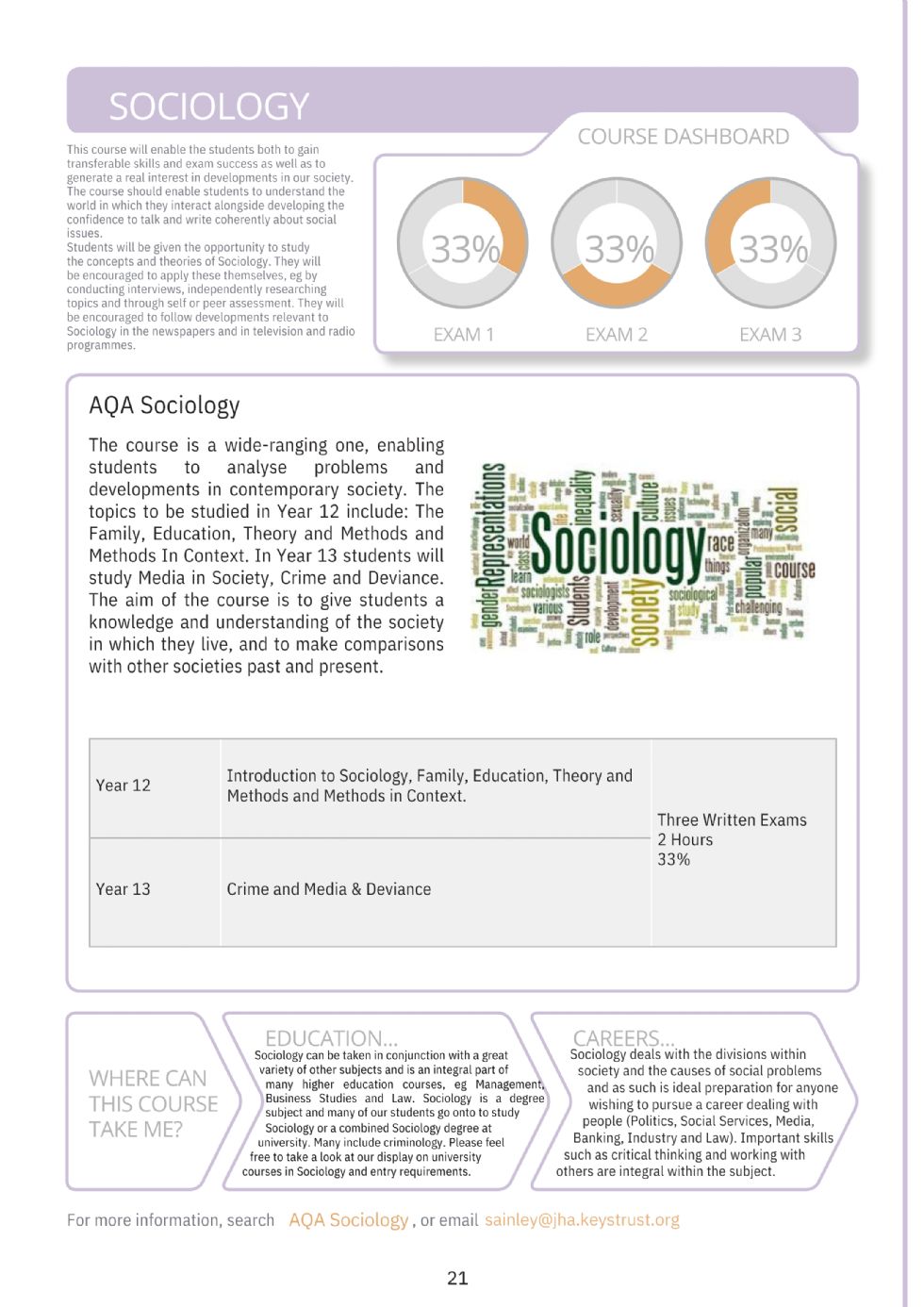
SOCIOLOGY
The intent of our Sociology curriculum at A Level and GCSE is to inspire students to question the world around them, develop a deeper understanding of social structures and processes, and engage critically with contemporary social issues. We aim to foster curiosity about how society operates, how individuals and groups interact, and how power, inequality, and culture shape human experience.
Our curriculum provides a coherent and challenging exploration of key sociological themes including education, family and households, beliefs, crime and deviance, and social stratification. Through engagement with classic and contemporary sociological theory, students learn to interpret and evaluate the work of key thinkers, developing an appreciation of how ideas evolve in response to social change.
Students are equipped with the tools to conduct sociological research, analyse data, and apply a range of theoretical perspectives to social phenomena. They learn to question assumptions, construct balanced arguments, and communicate ideas clearly and confidently. Throughout the course, we emphasise the importance of evidence-based reasoning, ethical awareness, and respect for cultural and social diversity. This awareness encourages our students to be 8oo,ki, recognising how education and effort can transform both their own lives and their communities.
Sociology helps students understand how society functions and how institutions, cultures, identities, and power structures shape people’s lives and the world around them. By studying topics such as inequality, social change, globalisation, gender, ethnicity and class, students learn to see connections between personal experiences and larger social forces. Through the teaching of subjects in A Level such as Media it encourage young people to take a critical view of the information they are being exposed to on a daily basis and evaluate the usefulness of larger news corporations alongside versions of citizen journalism.
Sociology plays a vital role in preparing students for ambitious next steps. Whether at university, in apprenticeships, or in the workplace. This is done by developing the critical thinking, communication, and analytical skills that underpin success in any pathway.
Through our curriculum we:
-
Develop the ability to think critically about society, culture, and social change.
-
Foster independent, reflective learners who can evaluate competing explanations and evidence.
-
Equip students with analytical, research, and communication skills that prepare them for higher education and a broad range of careers.
-
Encourage understanding of social inequality and promote empathy, tolerance, and respect for difference.
-
Empower students to become informed citizens who can engage thoughtfully with social and political issues in the modern world.
key stage 4
key stage 5