
BUSINESS & ECONOMICS
Our Business and Economics curriculum ensures that every student is well-educated, of good character, and ready for ambitious next steps. We aim to inspire curiosity about the world of business and economics and to prepare learners to make informed, ethical and confident decisions in a complex global society.
Our curriculum embodies the Academy’s mission by being ambitious, broad, and knowledge rich. It empowers students to think critically about how individuals, businesses, and governments interact within local, national, and global contexts. We explicitly develop literacy, numeracy, and oracy, while promoting integrity, responsibility, and enterprise. Students are challenged to work hard, act with kindness, and demonstrate the school’s core values in all aspects of their learning.
What we want students to know, understand and do
By the time students leave Jack Hunt Academy, they will:
• Know key business and economic theories, models and concepts.
• Understand how economic and business activity affects individuals, society and the environment.
• Be able to analyse and interpret data, construct reasoned arguments, and evaluate evidence to make informed decisions.
• Demonstrate creativity, problem-solving and enterprise thinking in practical and theoretical contexts.
• Communicate confidently using subject-specific terminology and structured reasoning.
KEY STAGE 4
In Key Stage 4 (GCSE Business) students will develop an understanding of how businesses operate and make strategic decisions, apply theory to real-world situations, and reflect on ethics and sustainability. 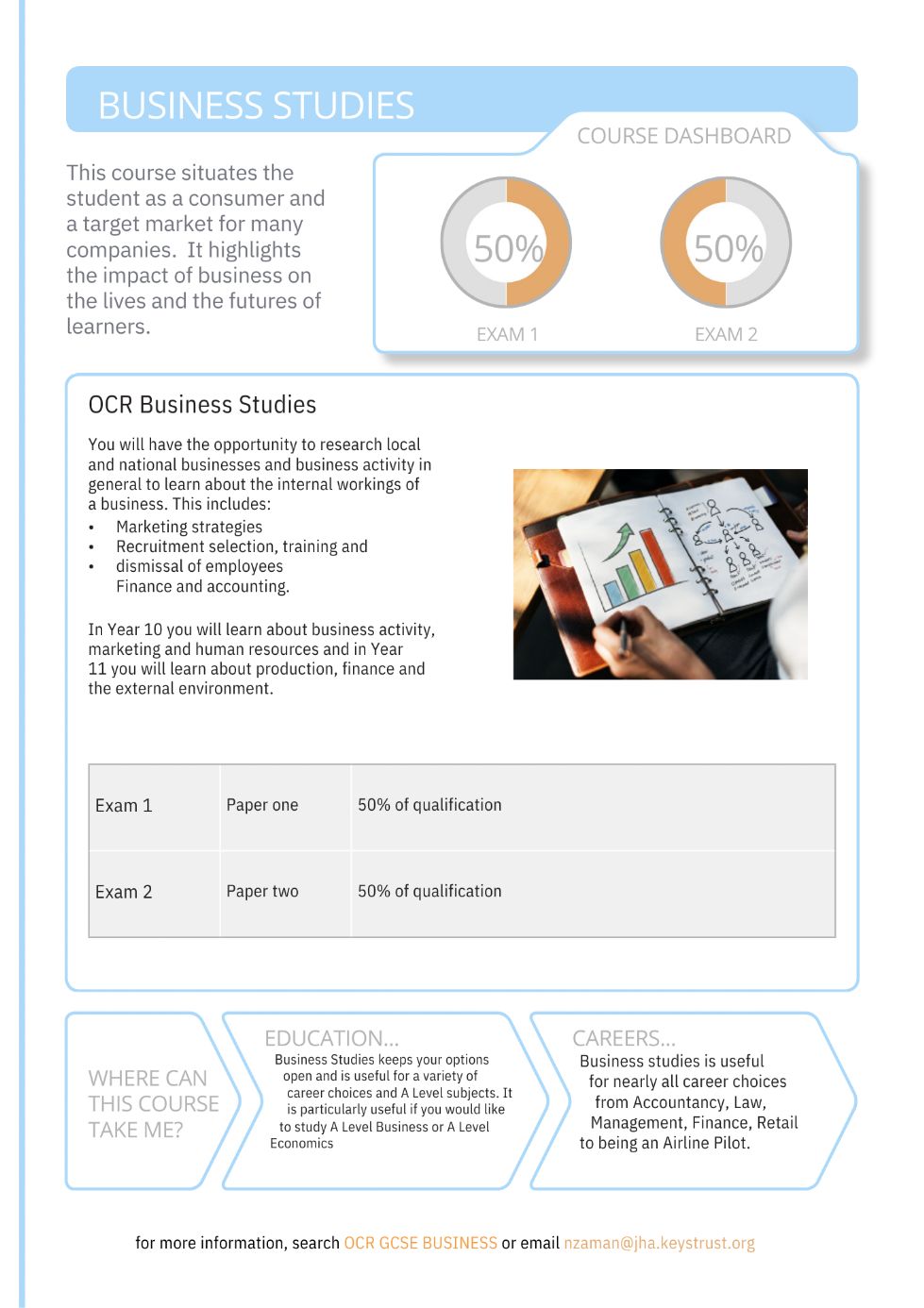
KEY STAGE 5
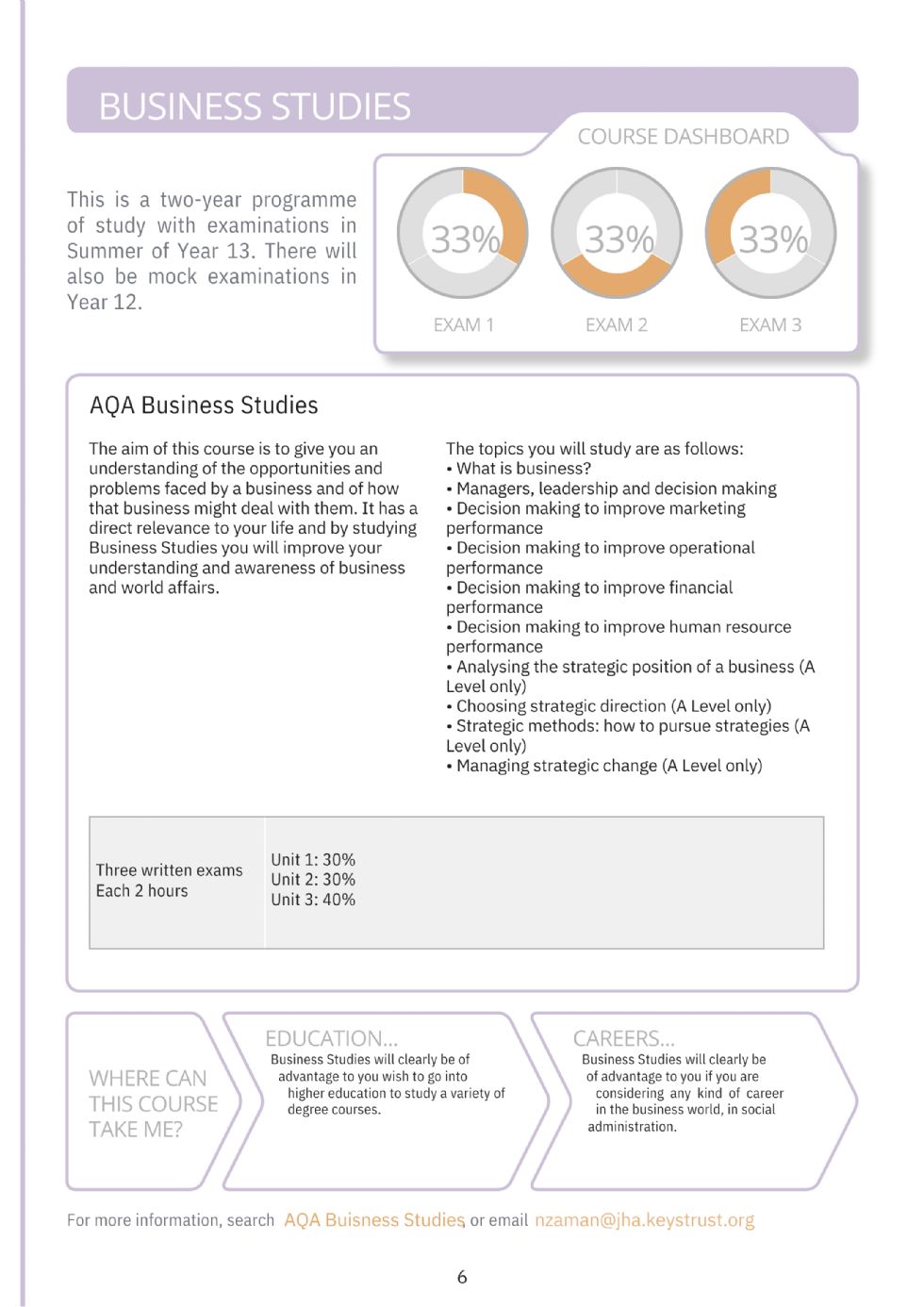
In Key Stage 5 (A-Level Business & Economics) students will develop the skills for and demonstrate deep analytical and evaluative thinking, interpret data effectively, debate multiple perspectives, and links theory to contemporary global issues.
We will achieve this through:
• Challenging, engaging and relevant content.
• Explicit teaching of literacy and analytical skills.
• Diverse examples reflecting global and local contexts.
• Stretch and support for all learners, ensuring accessibility and equity.
• Enrichment opportunities such as enterprise projects, guest speakers and links with employers and universities.