
Mathematics
The Maths curriculum covers topics in Algebra, Geometry, Probability, Statistics and Numbers. The curriculum is sequenced to support all students embed, revisit and build on their learning each year. This is to support student retention and close gaps in learning. This allows students to create links across different mathematical topics as well as subjects to access application and modelling questions.
Teachers at Jack Hunt Academy use the curriculum to get students excited about learning Maths. Our aim is to encourage a greater uptake of A Level Maths and Further Maths, through our ambitious curriculum and extra-curricular activities. Throughout the curriculum sequence, students will be taught using consistent pedagogical practices to ensure that as they move across different sets continuity in learning is seamless.
The curriculum is structured to enable all students to access all elements and lessons are scaffolded accordingly.
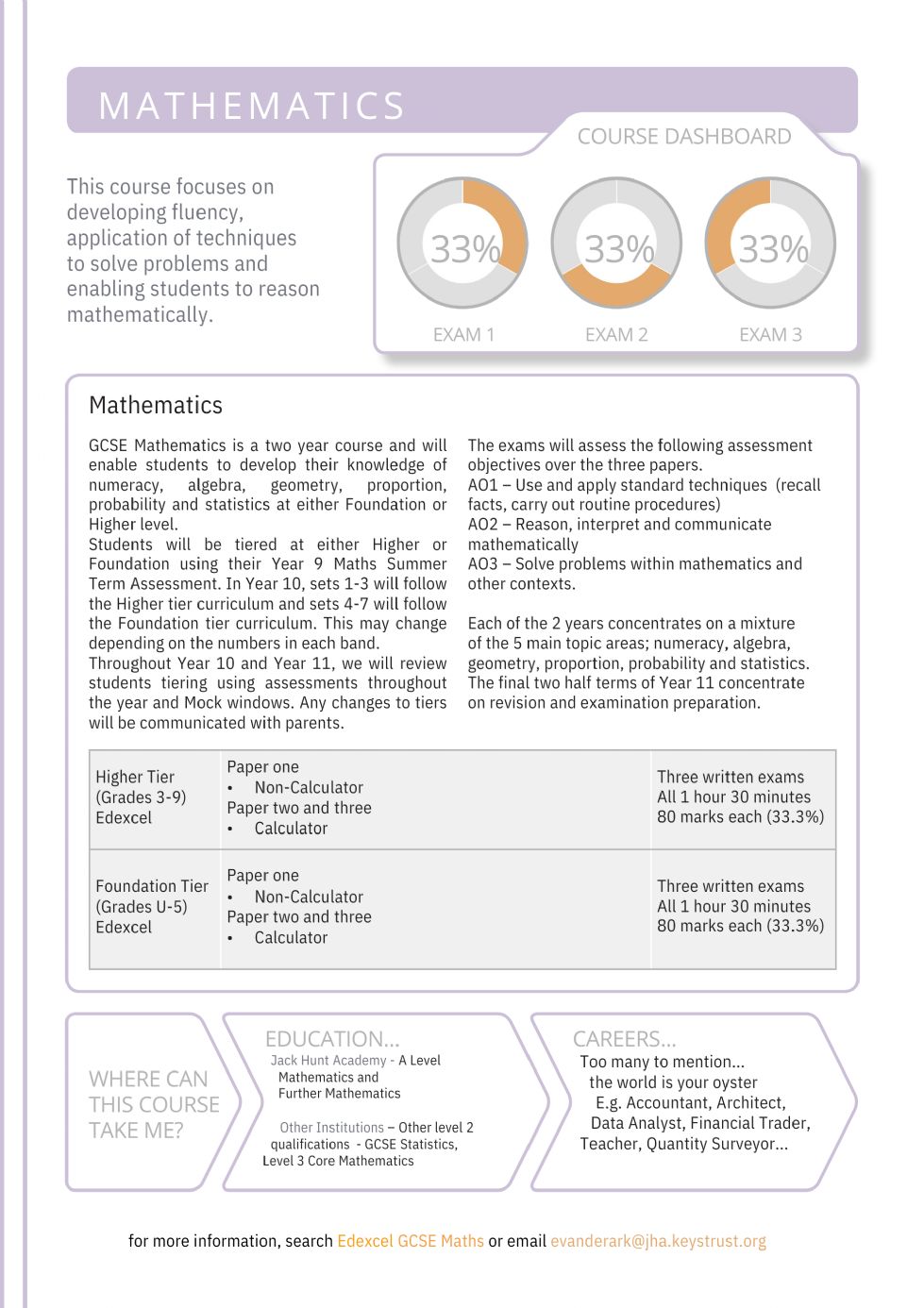
At KS4, students either sit the Foundation or the Higher Tier for GCSE Maths. We stay flexible within our groupings and use our assessments to revisit tier decisions. This continues from Year 10 up until February Half-Term in Year 11. This flexibility provides all students with the opportunity to sit the best exam tier for them.
Our aim is for all students to be in literate in number, algebra, probability, statistics, geometry and proportion by the time they leave Jack Hunt Academy.
key stage 3
Aims of the curriculum area
• Mathematical fluency and problem solving is at the heart of our approach to teaching Mathematics.
• We follow the WhiteRose scheme of learning, which aims to build solid foundations and encourages students to make links between the many areas taught in the Maths curriculum.
teaching methods
Teaching methods focus on developing students’ concrete, pictorial and abstract understanding of mathematical concepts. • These methods include solving problems, not just with the use of equations, but by using objects and pictures to represent the information in accessible ways for students.
streamed classes
• Students are placed in bands from the beginning of Year 7 according to information received from primary schools, Key Stage 2 SAT results and our Year 7 Baseline assessment.
• This banding is flexible and movement between groups is reviewed regularly in the department based on class performance, homework completion and key assessment points (Autumn, Spring and Summer)
resources
• Students in year 7 will start the WhiteRose scheme of work, which is built from the National Curriculum programme of study that focusses on students’ foundational knowledge and application towards problem solving. This follows on from the scheme of work followed by most of our feeder Primary Schools.
• Students will continue their progression through Number, Algebra, Geometry and Statistics.
• Homework is set online via the website SparxMaths. These tasks are set weekly and follow each classes’ scheme of work, regularly consolidating current and past learning. The platform uses an AI to learn the level of each pupil and gives them tailored questions at a suitable level.
other activities
• Students can participate in the UK Mathematical Challenges at Junior, Intermediate and Senior levels.
• SparxMaths Homework club – students will have access to support from Maths teachers with their Homework each lunchtime.
• Targeted revision sessions for students in Year 11 and Year 13.
• Year 12 Problem-solving programmes run by the AMSP
• Support with university admissions tests for Year 12/13 students
• Team Mathematics Challenges take place throughout the year, in which students compete against young mathematicians in other local schools.
Key stage 4
At the end of KS4, a JHA Maths student will be able to recall GCSE level knowledge for algebra, number, geometry, probability, statistics and proportion. They have a solid foundation upon which they have built their knowledge. Many will also be able to confidently solve applied Maths questions and be successful in their GCSE exams.
key stage 5
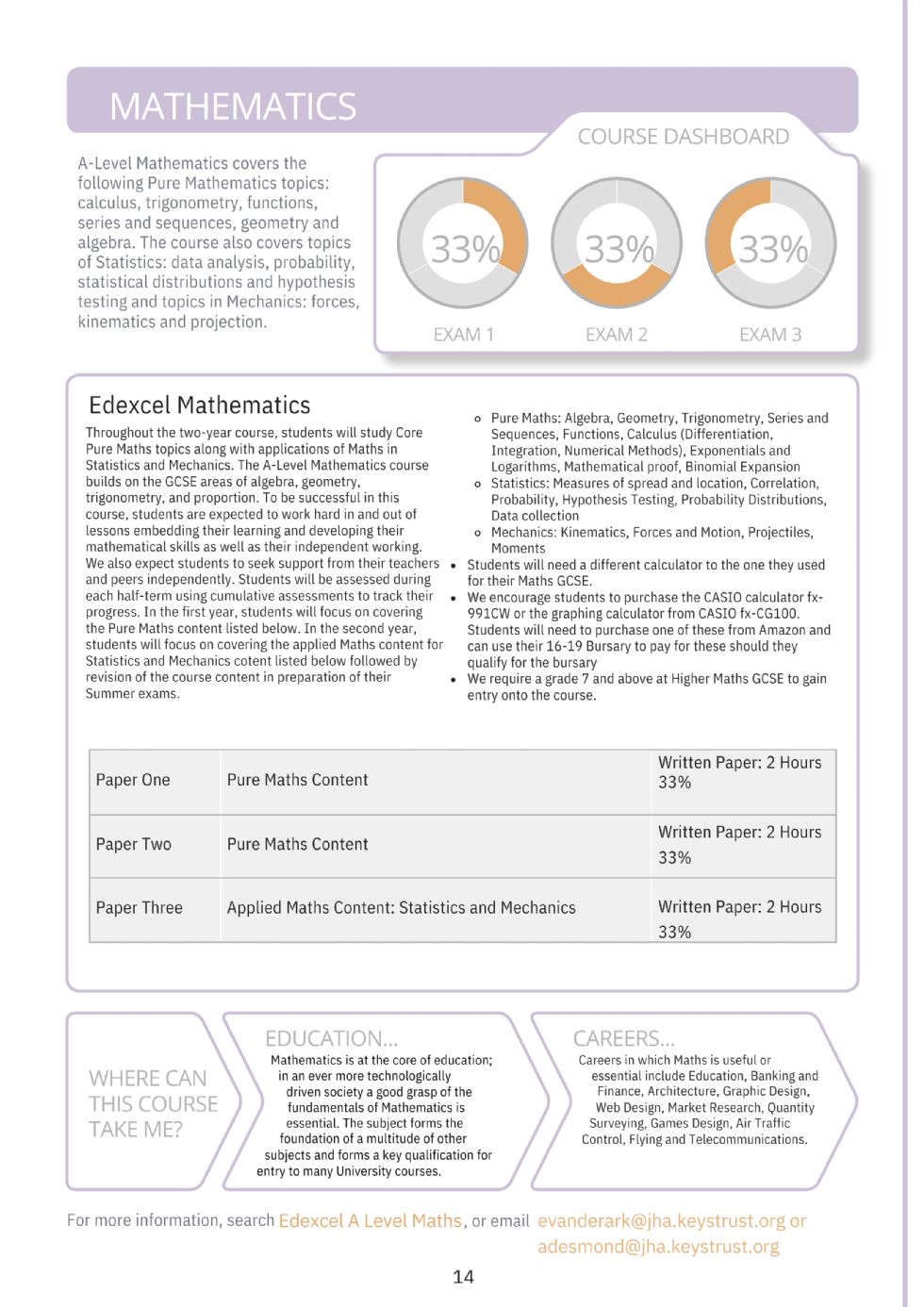
At the end of KS5, a JHA Maths student will be able to have built significantly on their GCSE Higher Maths knowledge and confidently apply foundational A Level Maths knowledge to procedural questions. They will then be able to confidently complete modelling questions indicating their higher A Level Maths knowledge. They will be equipped to extend their Mathematical knowledge further as undergraduates or to apply their advanced knowledge to their chosen careers.