
MODERN FOREIGN LANGUAGES
At the heart of our Modern Foreign Languages (MFL) curriculum is the belief that every student deserves the opportunity to become a confident and competent communicator in a foreign language.
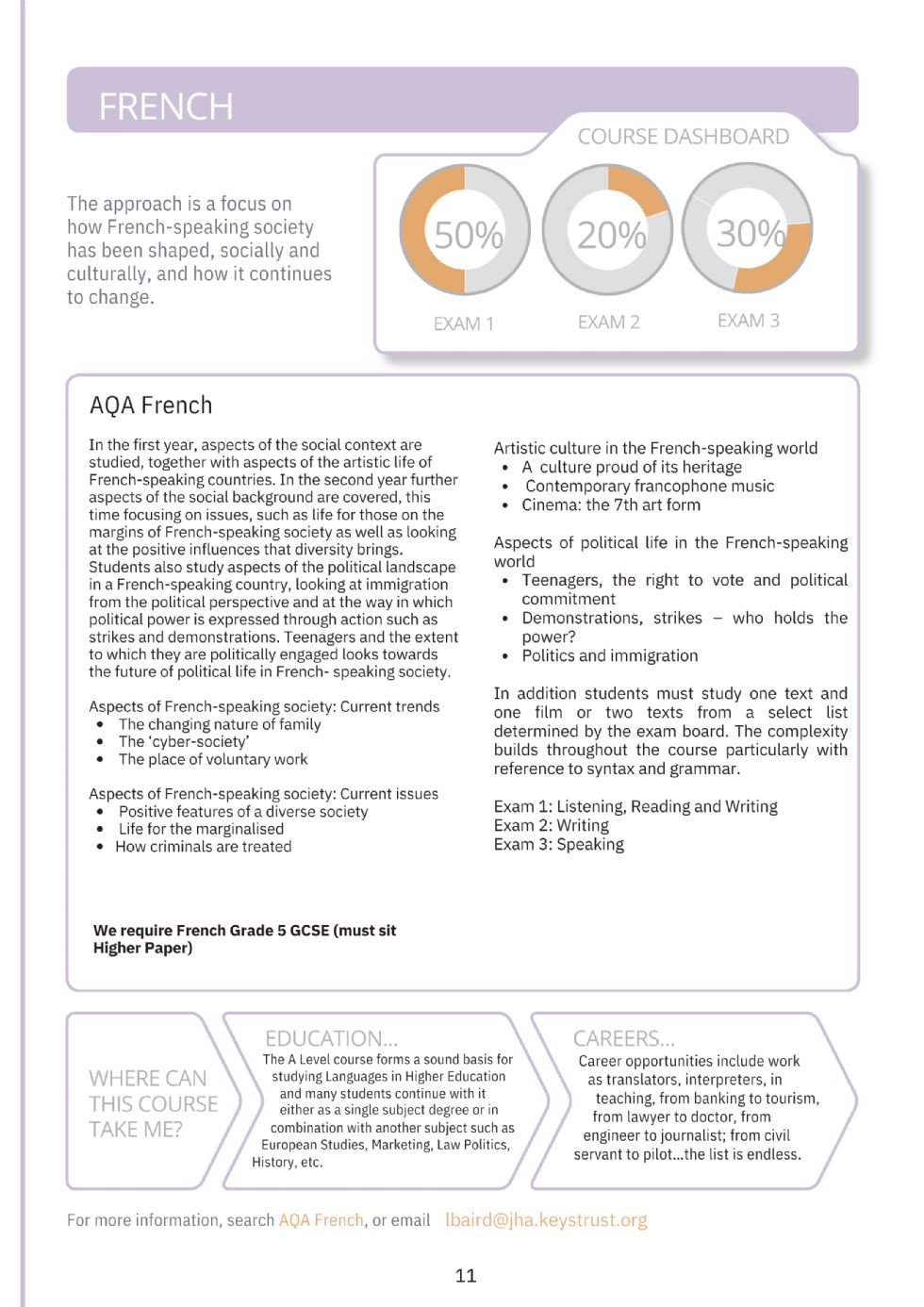
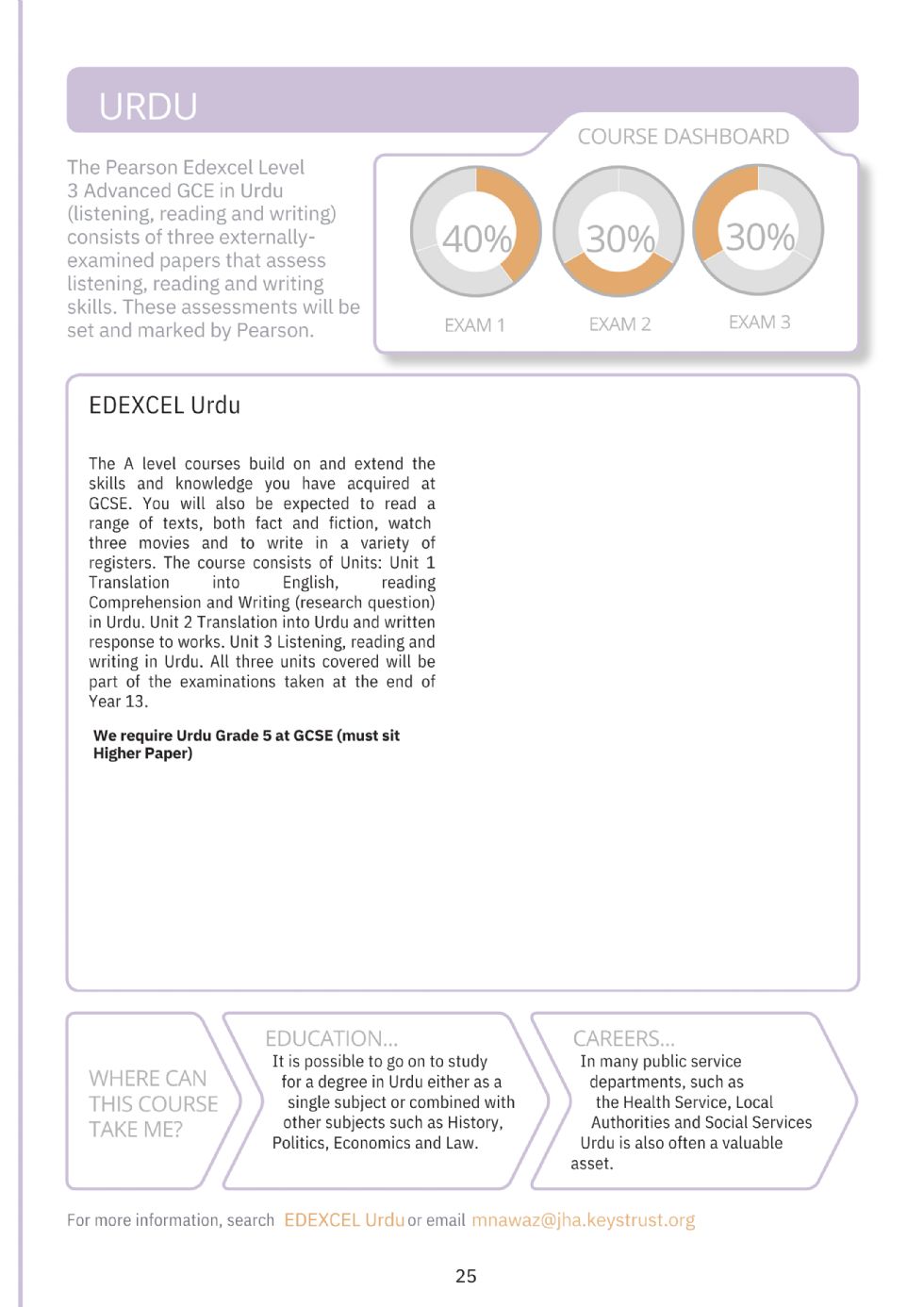
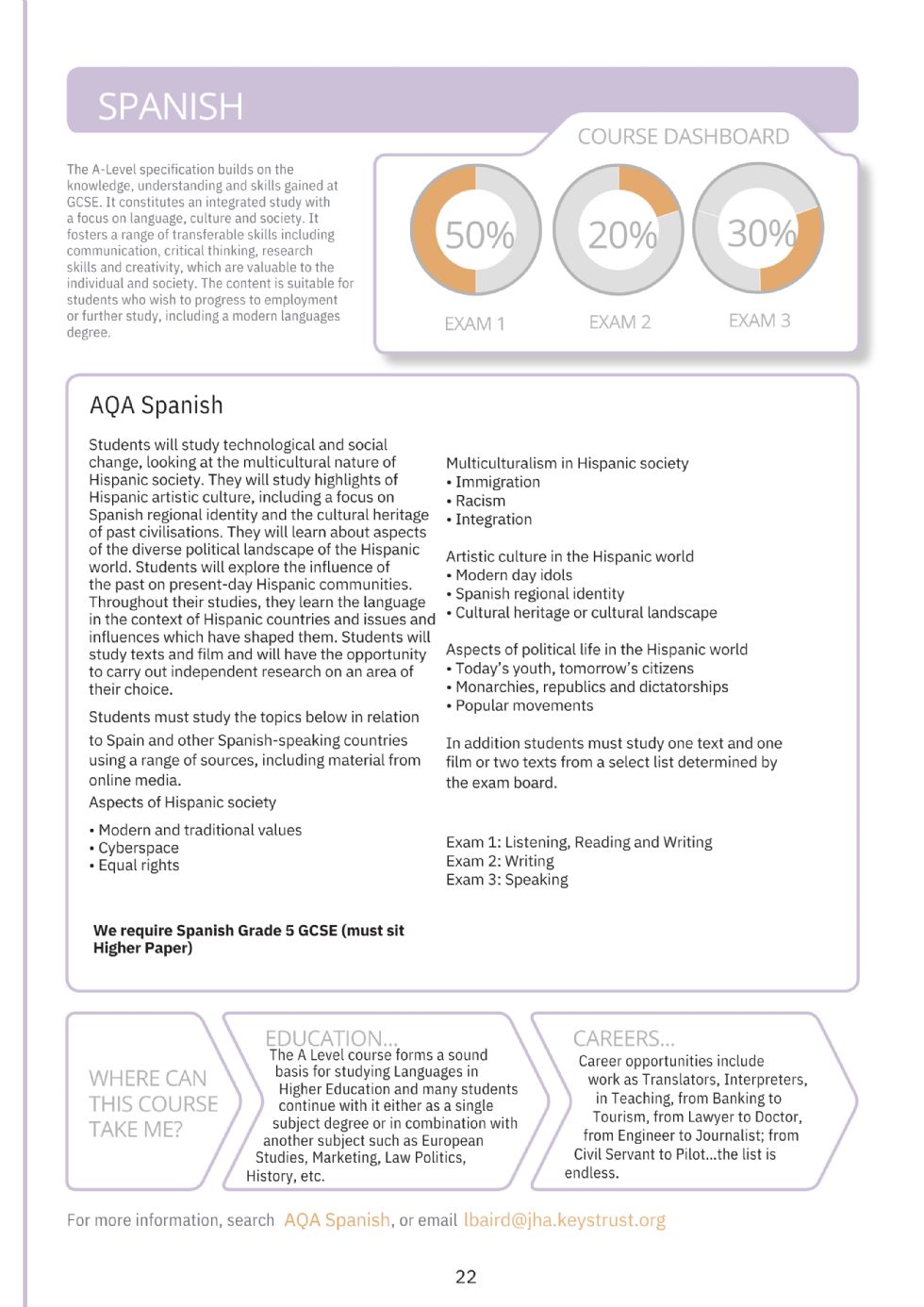
Through the study of French, Spanish or Urdu, students gain not only the practical skills to understand and express themselves in another language, but also an invaluable insight into the culture, civilisation and diverse communities of the wider world. Our curriculum fosters curiosity, tolerance and respect for other cultures, reflecting our school’s mission to develop students who are well-educated, of good character, and ready for ambitious next steps.
We aim for a curriculum that is ambitious, knowledge-rich and inclusive, with high expectations and challenge for all learners. We believe that every student, regardless of starting point, deserves stretch and support, and so we "teach to the top", ensuring that all learners are exposed to high-level linguistic input, tasks and exemplars. Teachers bring strong subject knowledge and passion for languages, using the target language consistently in the classroom to immerse students in authentic communication.
Students develop the four key language skills - listening, speaking, reading and writing - from Year 7 through to Year 13, with a focus on the systematic development of phonics, vocabulary and grammar. Through a well-sequenced curriculum, learners revisit and build upon key linguistic structures, enabling them to communicate with increasing accuracy, fluency and spontaneity.
The MFL curriculum also contributes strongly to students’ personal development. It encourages effective learning habits such as resilience, independence, and reflection, while promoting positive attitudes towards other cultures and languages. This cultural understanding not only enhances their world view but supports the development of good character and empathy, core values within our school community.
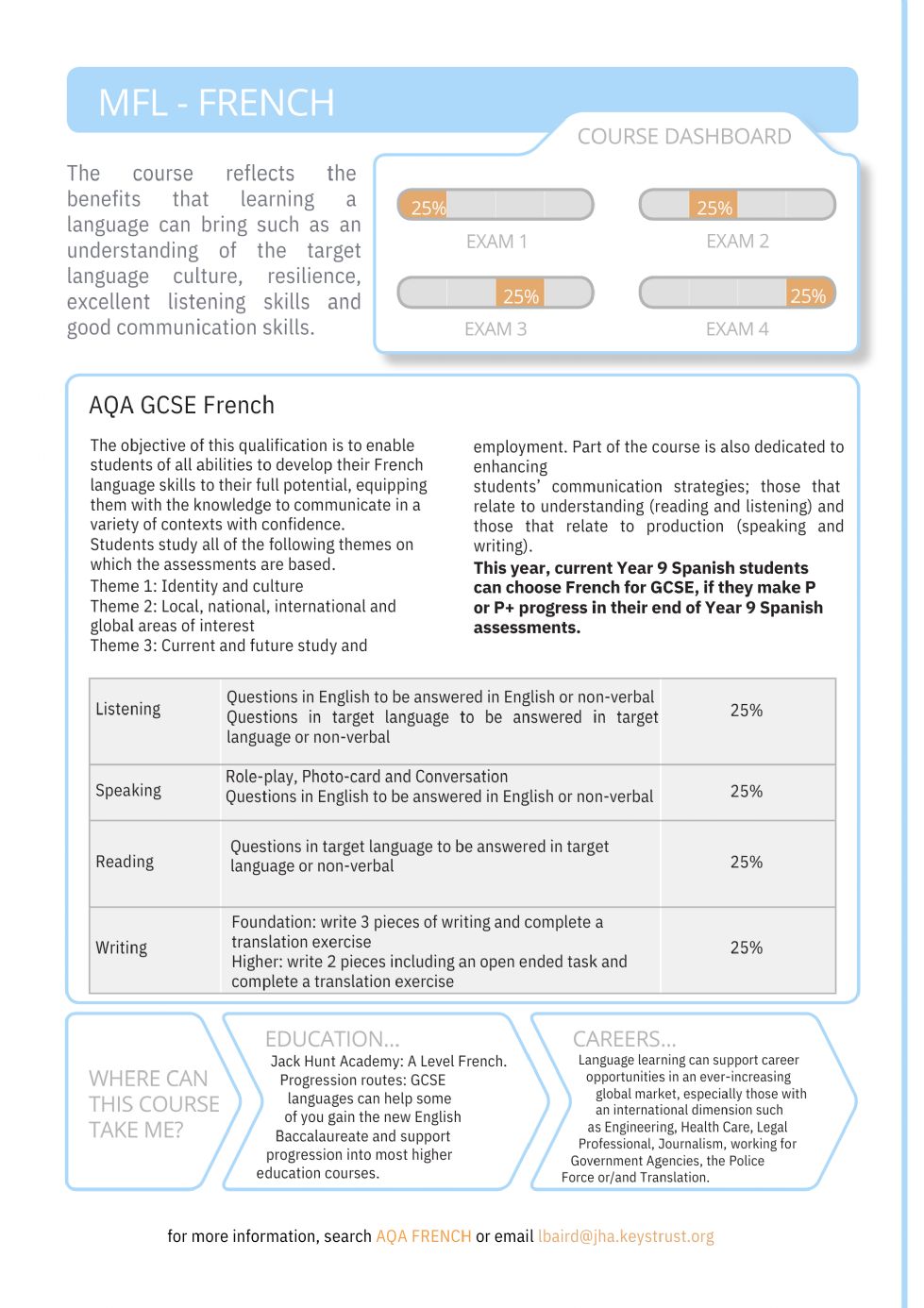
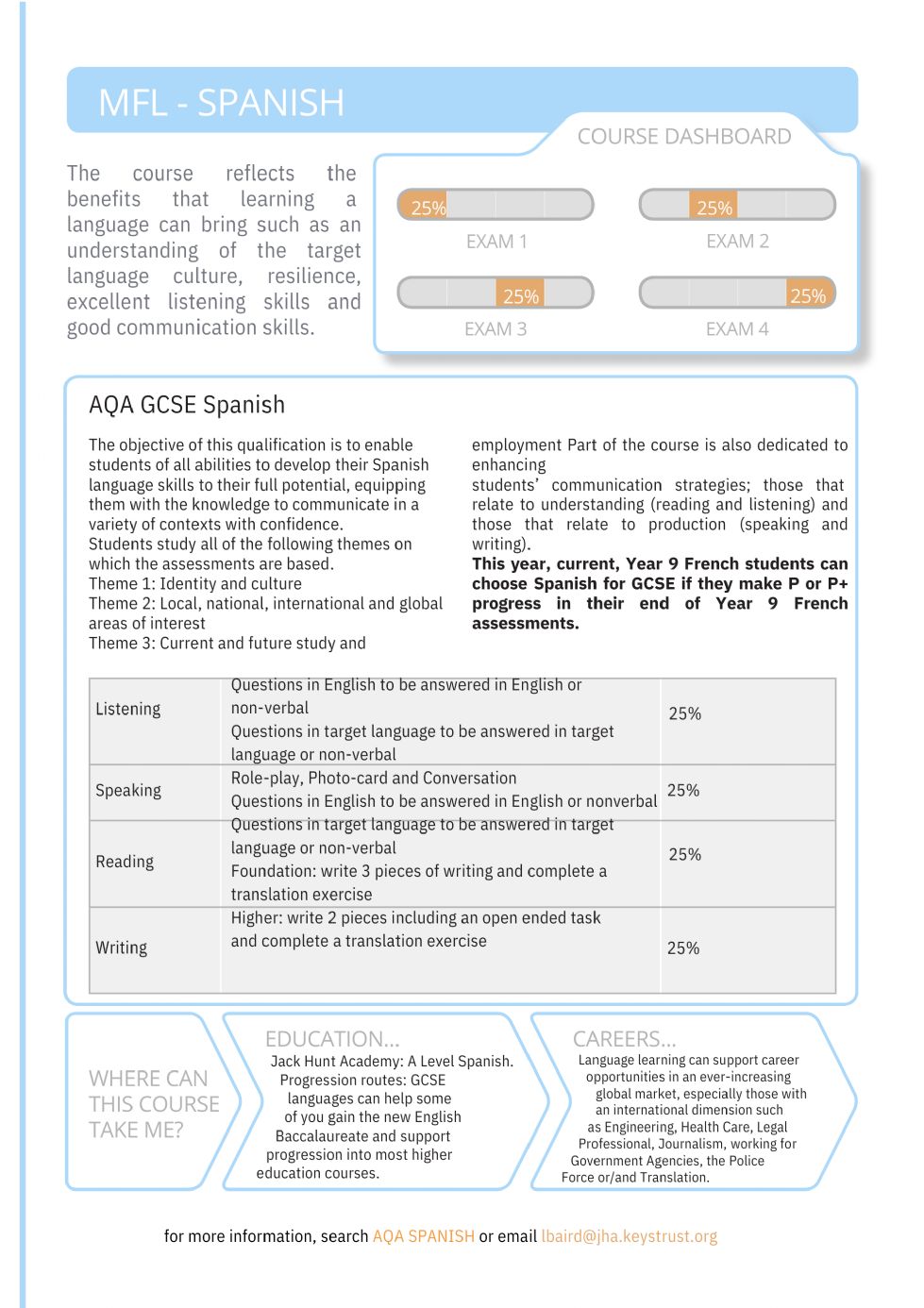
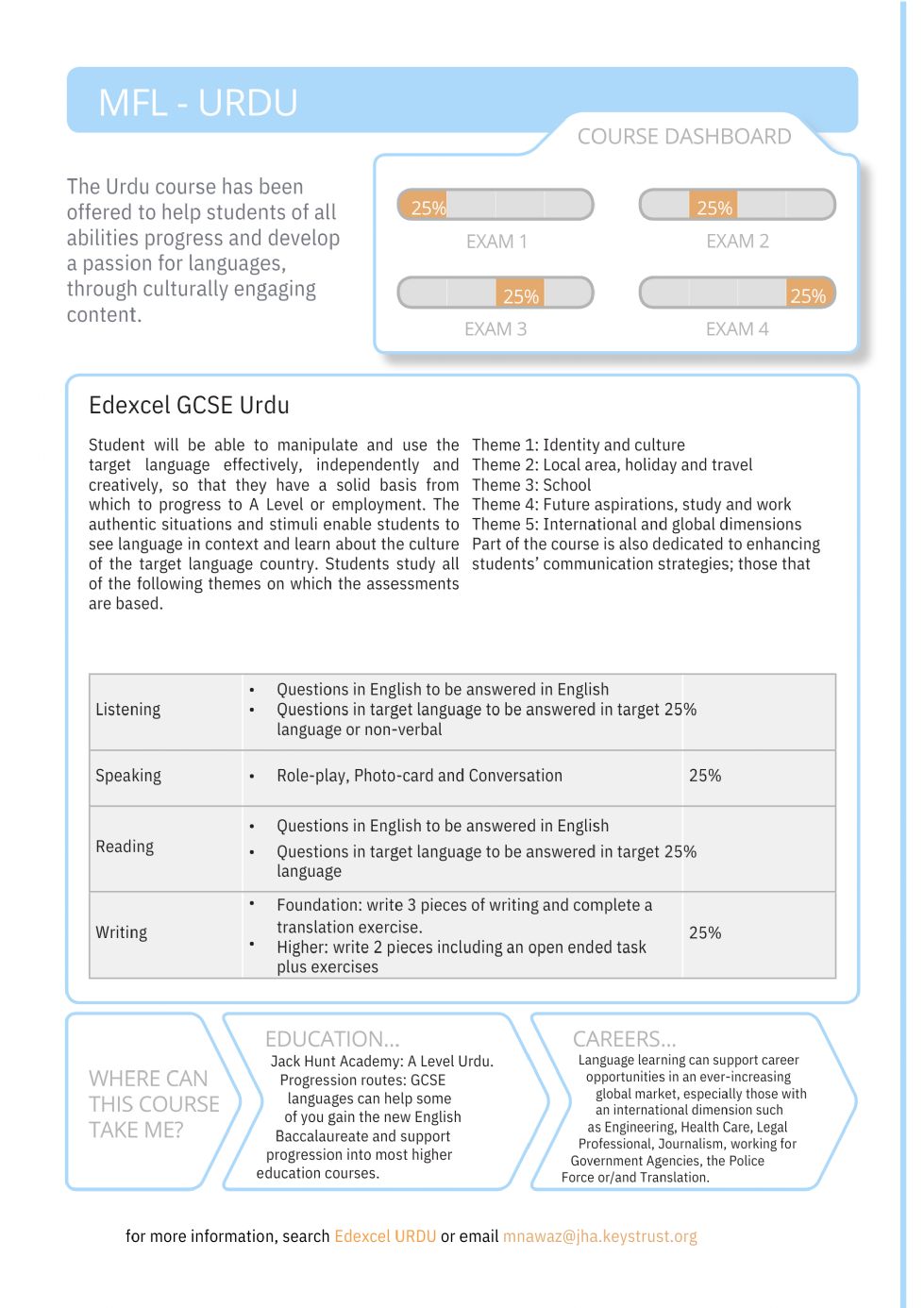
Students choose their language at the end of Year 6 and continue their study through to Year 9, with the option to deepen their knowledge and pursue qualifications at GCSE and A Level. This long-term commitment allows learners to grow into capable linguists, well-prepared for university, apprenticeships, and global career opportunities.
We also celebrate the linguistic diversity within our school community. Students who speak another language at home may have the opportunity to gain formal qualifications, such as GCSE or A Level, in their home language, further enriching their academic profile and recognising the valuable skills they bring to our school.
Ultimately, the MFL curriculum inspires students to be aspirational, globally minded, and ready to embrace the multilingual and multicultural world they are a part of, living out the school values of Hard Work, Integrity and Kindness.
KEY STAGE 3
Aims of the curriculum area
• To enable all students to understand and to communicate effectively in a foreign language.
• To offer insights into the culture and civilisation of the countries where the language is spoken.
• To encourage positive attitudes to language learning and to speakers of foreign languages.
• To give students the opportunity to develop links with and visit countries where the language is spoken when appropriate.
Accordion Title
• A variety of teaching and learning styles are used, including whole class teaching, group work, pair work, individual work and use of online resources.
• Students work on the four language skills: speaking, listening, reading and writing.
resources
• All classrooms are equipped with interactive whiteboards.
• Students will have access to online resources they can use to support their learning at home; homework will be weekly vocabulary lists accessible online via www.quizlet.com
key stage 3 curriculum outline
All Year 7 choose between French, Spanish or Urdu before the start of term. Our aim is to ensure that all students :
• Understand and respond to spoken and written language from a variety of authentic sources.
• Speak with increasing confidence, fluency and spontaneity, finding ways of communicating what they want to say, including through discussion and asking questions, and continually improving the accuracy of their pronunciation and intonation.
• Can write at varying length, for different purposes and audiences, using the variety of grammatical structures that they have learnt.
• Discover and develop an appreciation of a range of writing in the language studied.
KEY STAGE 4
KEY STAGE 5